

Dutch Goal Difference
The Netherlands already improved their position with the 5-1 win over Sweden. Another controlled victory could secure qualification and strengthen their seeding path.
(World Cup 2026 Matchday 3 — Final Group Stage Match)
 Tunisia
 Netherlands
Tunisia vs Netherlands is not just another final group-stage fixture. For the Netherlands, this is a chance to finish Group F with authority after a mixed but dangerous opening campaign. For Tunisia, it is a final attempt to restore credibility after two heavy defeats exposed serious defensive problems.
Editorial Win Probability
Editorial probability estimate by MundialAnalytics. Not betting odds.

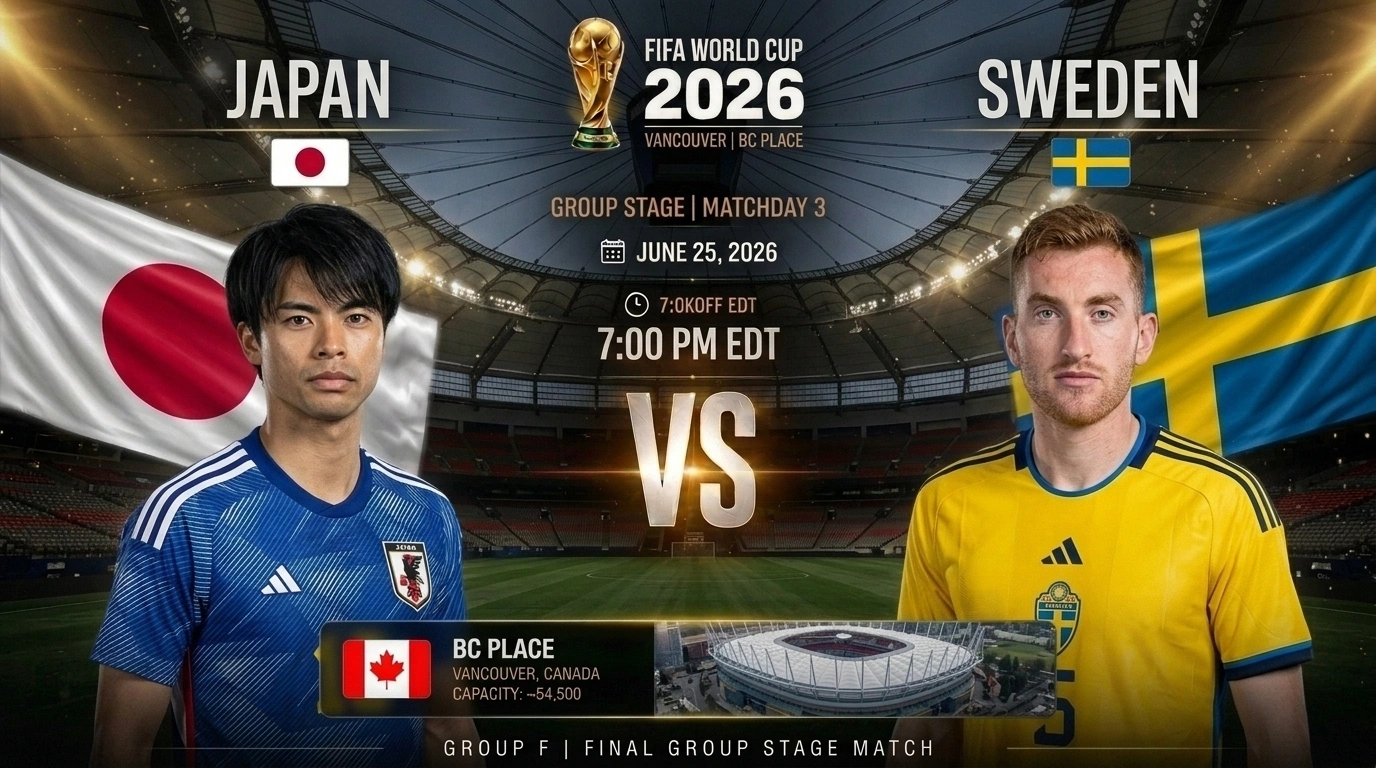
Tunisia vs Netherlands kicks off at 7:00 PM EDT on June 25, 2026 in Group F at Lumen Field, Seattle. The game sits alongside Japan vs Sweden, meaning both final Group F matches will shape qualification and final position at the same time.
The story of Tunisia vs Netherlands is shaped by two very different campaigns. The Netherlands opened with a chaotic 2-2 draw against Japan, then responded with a commanding 5-1 win over Sweden. That second performance changed the tone of their group-stage campaign: it confirmed their attacking ceiling, improved their goal difference and placed them in strong position to qualify from Group F.
Tunisia's tournament has moved in the opposite direction. A 5-1 defeat to Sweden was damaging enough, but the 4-0 loss to Japan made the situation even more severe. After two matches, Tunisia have conceded nine goals and scored only once. That defensive record tells the main story: they have struggled to defend wide spaces, recover after turnovers and maintain compactness once opponents increase the tempo.
This creates a difficult tactical equation. Tunisia need pride, aggression and a response, but if they open the game too early, the Netherlands have exactly the kind of attacking structure that can punish stretched defensive lines. The Dutch do not need chaos. They need control, efficient chance creation and enough defensive discipline to avoid allowing Tunisia belief.
Group F is one of the more interesting groups because Japan and the Netherlands both reached four points after two matches, while Sweden still remain alive after their opening win against Tunisia. Tunisia are in the weakest position: they sit on zero points with a heavy negative goal difference, meaning even a win may not be enough to create a realistic path through the best third-place ranking.
The Netherlands, however, are in a strong position. Their 5-1 victory over Sweden gave them a major goal-difference advantage and removed much of the pressure created by the opening draw against Japan. A professional win over Tunisia should be enough to secure qualification and could even keep them in contention for first place depending on Japan vs Sweden.
For Tunisia, the motivation is different. This is about avoiding a winless exit, improving a damaged defensive record and proving that the first two results were not a full reflection of their competitive level. That matters psychologically, but from a tactical and technical standpoint the matchup still heavily favors the Netherlands.
See our World Cup 2026 predictions hub and group overview for the wider tournament picture.
Tunisia have not lacked effort, but their defensive structure has repeatedly collapsed under sustained pressure. The 5-1 defeat to Sweden showed problems with aerial defending, second balls and transition protection. The 4-0 defeat to Japan exposed a different weakness: when opponents move the ball quickly through midfield and attack the half-spaces, Tunisia have struggled to keep their lines connected.
The biggest issue is not only the number of goals conceded. It is the pattern behind them. Tunisia have allowed opponents to build momentum in waves. Once the first line of pressure is broken, the midfield has often been forced to retreat too quickly, leaving the back line exposed. Against a Netherlands side capable of switching play and attacking with runners from multiple zones, that is a major concern.
To compete here, Tunisia need a much more compact 4-5-1 or 5-4-1 defensive shape. They cannot allow the Netherlands to receive freely between the lines, and they must reduce the space behind the fullbacks. Their best attacking route is likely direct: early balls into channels, quick support around the striker and set-piece pressure. Long periods of possession are unlikely, so Tunisia must maximize the few moments where the Dutch rest defence is not balanced.
The challenge is that chasing a result can make the same problems worse. If Tunisia push their fullbacks higher, the Netherlands can attack the space behind them. If Tunisia keep everyone deep, they may struggle to create enough chances. That is why this match feels so difficult for them: almost every tactical choice carries a clear downside.
Read our Tunisia team analysis for squad depth, key players and tournament outlook.
Netherlands looked unstable in the 2-2 draw against Japan, but their response against Sweden was exactly what a serious contender needed. The 5-1 win was not only about finishing quality. It showed more balance in possession, better pressure after losing the ball and stronger occupation of the attacking zones.
The Dutch have enough technical quality to dominate this match without forcing the game. Their likely approach should be patient but aggressive in the right moments: circulate the ball across the back line, pull Tunisia's midfield block from side to side, then accelerate through diagonal passes into the wide forwards or advanced midfield runners. Tunisia's defensive record suggests that repeated pressure will eventually create clear chances.
The key for the Netherlands is avoiding unnecessary transitions. Their only real danger is losing the ball carelessly when the fullbacks are high. If they keep a strong rest-defence structure, Tunisia will struggle to build meaningful attacks. This is the type of fixture where the Netherlands can control territory, pin the opponent back and create pressure through volume rather than desperation.
There is also a squad-management angle. Because the Netherlands are in a strong position, they may rotate one or two players, but the group is not fully closed. That should keep the starting XI strong enough to chase victory. A win not only secures qualification; it also keeps their rhythm high before the knockout phase.
Explore our Netherlands team profile for detailed squad analysis ahead of this fixture.
Editorial comparison based on the opening two Group F matches.
| Factor | Tunisia | Netherlands | Edge |
|---|---|---|---|
| Group stage path | Lost 5-1 to Sweden and 4-0 to Japan | Drew 2-2 with Japan, beat Sweden 5-1 | Netherlands |
| Squad depth | Limited rotation options after two heavy defeats | Strong depth across midfield and attack | Netherlands |
| Attacking threat | Mostly direct and set-piece dependent | Multiple routes to goal, strong wide and central threat | Netherlands |
| Defensive stability | Nine goals conceded in two matches | Improved after the Japan draw | Netherlands |
| Midfield control | Struggles when opponents increase passing speed | Capable of controlling rhythm and territory | Netherlands |
| Set pieces | One of their few realistic routes to danger | Strong defensive size and attacking delivery | Netherlands |
| Matchday 3 pressure | Playing for pride and a difficult outside chance | Playing to secure qualification and possibly first place | Netherlands |
The Netherlands should control most of the possession. Their best route is patient circulation followed by sudden acceleration into the half-spaces. Tunisia will likely defend in a compact block and try to prevent central progression, but repeated switches of play can stretch that structure.
Tunisia may press selectively after backwards passes, but a full high press would be risky. The Netherlands are comfortable playing through pressure and can punish an exposed midfield line. Dutch counter-pressing after turnovers should be a major factor.
This is Tunisia's main hope. If they can win the ball and attack quickly before the Netherlands reset, they may create isolated chances. The problem is that their own defensive transitions have been poor, which gives the Netherlands an even greater advantage.
The wide zones are likely decisive. Tunisia have struggled to defend switches and runners outside the fullbacks. The Netherlands can overload one side, pull Tunisia across, then attack the far-side channel with speed.
Tunisia need set pieces to matter because open-play chances may be limited. The Netherlands must avoid unnecessary fouls and corners, but their physical profile should make them comfortable defending most dead-ball situations.
The Netherlands already improved their position with the 5-1 win over Sweden. Another controlled victory could secure qualification and strengthen their seeding path.
After conceding nine goals in two matches, Tunisia need a far more compact and disciplined performance to stay alive for more than the first half.
If the Netherlands control counterattacks, Tunisia will struggle to create enough pressure. If Tunisia find early transitions, the game could become less comfortable.
An early Dutch goal would force Tunisia to open up, creating exactly the spaces the Netherlands want to attack.
Expected shape: 5-4-1 / 4-5-1
Tunisia are expected to defend deep, narrow the central lanes and look for direct releases into the channels. Their main priority will be reducing the space between midfield and defence.
Expected shape: 4-3-3 / 3-2-5 in possession
The Netherlands should dominate territory, use wide overloads and push midfield runners between Tunisia's lines. Their rest defence will be important against rare counters.
The strongest argument for a Netherlands win is the combination of form, tactical control and matchup advantage. Tunisia have looked vulnerable against teams capable of moving the ball quickly through midfield and attacking wide areas. The Netherlands have exactly those tools, and their 5-1 win over Sweden suggests that the attack is now finding rhythm.
Tunisia can make the game uncomfortable if they defend with discipline, slow the tempo and turn the match into a set-piece battle. However, over 90 minutes, the Netherlands should create too much pressure. The Dutch should have more possession, more shots and better-quality chances.
The expected pattern points toward a controlled Dutch victory rather than a chaotic shootout. Tunisia may have moments on the break, but unless they score first, the match should gradually move in the Netherlands' direction.
Netherlands to win with control
Tunisia 0-3 Netherlands
Best Value Pick: Netherlands Win & Over 1.5 Goals
Confidence Level: High
This Tunisia vs Netherlands prediction is based on the opening two Group F matches, current tournament situation, tactical matchup and expected game state. The Netherlands have the stronger structure, deeper squad and clearer attacking mechanisms.
Tunisia vs Netherlands is scheduled for June 25, 2026 at Lumen Field, Seattle. Kick-off is at 7:00 PM EDT.
This fixture is in World Cup 2026 Group F. The same group also includes Japan and Sweden.
Our editorial prediction is Netherlands to win. The exact score forecast is Tunisia 0-3 Netherlands.
The Netherlands have better squad depth, stronger attacking structure and superior form after beating Sweden 5-1. Tunisia have conceded nine goals in two matches.
Tunisia's position is extremely difficult after losing their opening two matches with a heavy negative goal difference. A win would improve their situation, but qualification would still depend on wider third-place ranking conditions.
The best value pick is Netherlands Win & Over 1.5 Goals. It fits both the tactical matchup and the goal patterns from the first two rounds.
Both Teams To Score leans No. Tunisia can threaten in transitions, but the Netherlands should control most phases and limit clean chances.
Over 2.5 goals is reasonable because Tunisia's defensive record has been poor and the Netherlands scored five in their previous match. The safer angle is Netherlands Win & Over 1.5 Goals.
The match is played at Lumen Field in Seattle.
The Netherlands are expected to dominate possession, attack through wide overloads and control territory. Tunisia will likely defend deep and look for direct counterattacks.