

Venue & Atmosphere
The setting at Boston Stadium will influence the emotional tempo of the match, especially in the opening half-hour when nerves are highest.
(World Cup 2026)
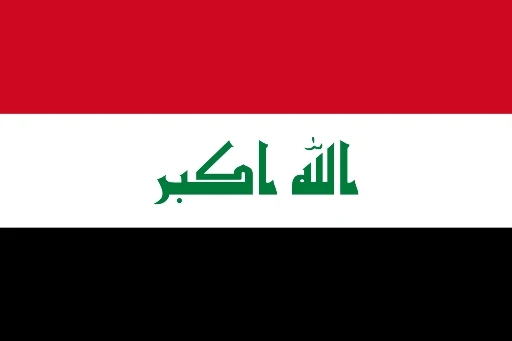 Iraq
Iraq
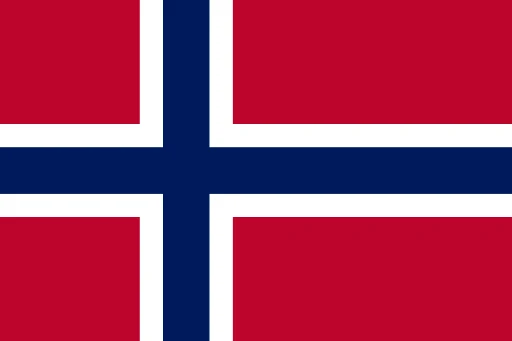 Norway
Expert tactical analysis, recent form comparison, key players, strengths, weaknesses and score prediction for this Group I fixture at Boston Stadium.
Editorial Win Probability
Editorial probability estimate, not betting odds.
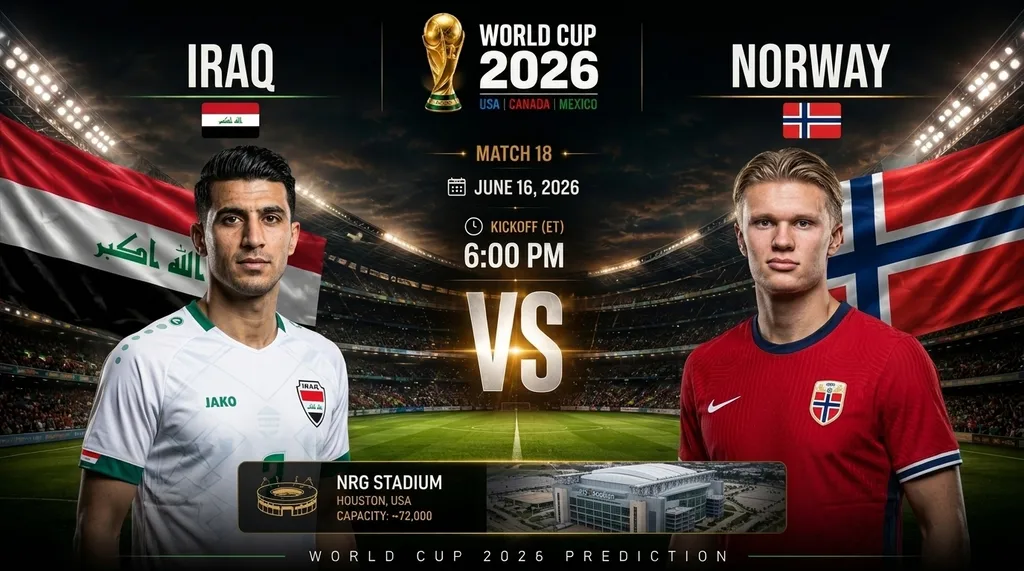
Our Iraq vs Norway Prediction examines a Group I fixture at Boston Stadium — a match that could set the tone for both teams' World Cup 2026 campaigns. Iraq will look to use home-continent familiarity and squad quality, while Norway arrive with a clear game plan built around organisation and selective attacking moments.
Iraq
Norway
Derived from each team's last five international matches and FIFA ranking on Flashscore.
| Metric | Iraq | Norway |
|---|---|---|
| FIFA Ranking | — | — |
| Last 5 Record | — | — |
| Goals Scored (last 5) | — | — |
| Goals Conceded (last 5) | — | — |
| Clean Sheets (last 5) | — | — |
| Qualification Record | AFC qualifiers | UEFA qualifiers |
Match results and FIFA rankings from Flashscore. Not betting data.
Iraq open their World Cup 2026 group campaign at Boston Stadium. An early result in Group I matters because the expanded 48-team format still punishes slow starts — three points builds momentum before the remaining group fixtures.
Norway arrive with a defined tactical identity and tournament experience at varying levels. They will view this fixture as a chance to test Iraq's composure and establish a platform for qualification from Group I.
This is a classic group-stage dynamic: one side expected to control territory against an opponent prepared to defend in phases and strike in transition. The balance between Iraq's possession ambition and Norway's counter-attacking threat should define the match.
Editorial assessment across seven key match factors.
| Factor | Iraq | Norway | Edge |
|---|---|---|---|
| World Cup experience | Established tournament pedigree | Varied finals experience | Iraq |
| Squad depth | Stronger top-end quality across the pitch | Compact squad with clear starters | Iraq |
| Attacking threat | Multiple routes to goal in open play | Transition-focused chance creation | Iraq |
| Defensive stability | Organised defensive structure | Disciplined low block when out of possession | Even |
| Midfield control | Greater ball retention under pressure | Compact midfield; limited sustained possession | Iraq |
| Set pieces | Aerial presence and delivery quality | Organised defending; threat on counters | Even |
| Pressure factor | Expectation to perform in front of home support | Freedom as underdogs in the opener | Norway |
Iraq will look to dominate the ball and stretch Norway horizontally. Norway are likely to concede territory willingly, focusing on a compact defensive shape between the lines.
Iraq may press selectively in the opening phases to force early errors. Norway will more often drop into a mid-block, triggering coordinated presses only when build-up becomes predictable.
The central battle lies here. Norway's best route to goal is quick vertical play through runners exploiting space in behind. Iraq must balance attacking width with rest-defense discipline.
Iraq's wide combinations should test Norway's defensive spacing. The visitors will aim to double up on the flanks and force play into central congestion.
Both teams carry set-piece relevance. Iraq's delivery quality could test zonal marking, while Norway's physical presence on defensive set pieces adds an underappreciated threat.
Iraq recent international results will be populated from Flashscore on the next data update.
Norway recent international results will be populated from Flashscore on the next data update.
Iraq's primary creative outlet will be central to breaking down a compact Norway block. Movement between the lines and link-up in the final third should define their best chances.
The player who sets Iraq's defensive rest balance will be critical in preventing Norway counter-attacks through central channels after turnover.
Norway's most dangerous outlet in transition will be the key counter-attacking weapon if Iraq overcommit in possession.
Organisation at the back and command of the penalty area will shape how aggressively Norway can play from a low block throughout the match.
Iraq's advantages in this fixture are structural: deeper squad quality, greater tournament experience and the ability to control phases of the match through possession and territorial pressure.
In wide areas, Iraq should generate enough service to test a compact Norway block. Set-piece quality adds secondary routes to goal if central corridors become congested.
Norway's best path to a positive result runs through disciplined defensive organisation and selective verticality. If Iraq overcommit in attack, the visitors have the pace to exploit space in behind.
As underdogs, Norway carry less external pressure than the favourite. That freedom can translate into sharper decision-making in the first half, particularly if Iraq force the issue too early.
The setting at Boston Stadium will influence the emotional tempo of the match, especially in the opening half-hour when nerves are highest.
How each team manages the rhythm of a World Cup match — without overreacting to early setbacks — could decide the result.
If Iraq overcommit, Norway's pace on the break becomes the equalizer. One well-timed counter could shift the entire tactical dynamic.
Opening group games are rarely free-flowing. The team that handles the emotional and tactical tension of the first half will likely control the result.
4-3-3 / 4-2-3-1
Iraq are expected to line up with a single pivot screening the back line, two advanced midfielders supporting the striker, and fullbacks providing width.
4-2-3-1 / compact 4-4-2
Norway will likely defend in a compact low block, with two disciplined pivots shielding the back four and quick transitions into the final third.
Draw or narrow margin
Confidence: Low–Medium
This Iraq vs Norway Prediction reflects editorial analysis of squad quality, recent form from Flashscore and the tactical matchup in Group I. World Cup openers often produce cautious scorelines — our call stays within a measured confidence band.