

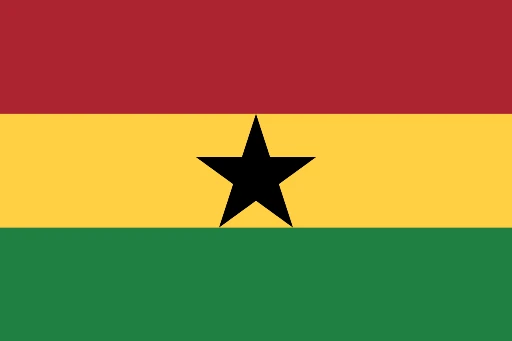
Ghana World Cup 2026 Team Analysis
Ghana enter the 2026 FIFA World Cup with a new coach, a talented attacking core and one of the most fascinating groups in the tournament. The Black Stars are in Group L with Panama, England and Croatia.
This Ghana World Cup 2026 team analysis looks at the tactical reset under Carlos Queiroz, the squad's key strengths, the Group L fixtures and Ghana's realistic route toward the knockout stage.
Squad Core and Key Player Profiles

Mohammed Kudus
Penalty-box presence who can finish chances and stretch center-backs. Movement between lines creates space for teammates in wide areas.

Antoine Semenyo
Central striker who attacks the penalty area with timing and movement. Offers a direct outlet to hold up play and connect wide runners.

Thomas Partey
Two-way midfielder trusted to win duels and keep structure without the ball. Distribution range helps switch play and relieve pressure on the back line.

Inaki Williams
Penalty-box presence who can finish chances and stretch center-backs. Movement between lines creates space for teammates in wide areas.

Jordan Ayew
Primary scoring threat who converts half-chances in tight matches. Physical presence and pressing help disrupt opponents in their own third.

Alexander Djiku
Center-back who wins duels and clears danger in set-piece situations. Composed on the ball when the team needs to play through pressure.
Kudus is Ghana's most dynamic attacking player and the one most capable of breaking a match open. Semenyo gives the attack physical power and direct running, while Inaki Williams can stretch defensive lines with movement in behind.
Partey remains one of Ghana's most important midfield figures when available. His positioning and passing can help Ghana avoid becoming too direct. Djiku and the defensive unit will carry major responsibility, especially against England's attacking depth and Croatia's midfield control.
Why Ghana Are Difficult to Predict at World Cup 2026
Ghana are one of the hardest teams in Group L to evaluate. Their squad contains players with genuine Premier League and European-level quality, but the national team has also gone through instability, coaching changes and inconsistent results before the tournament.
The appointment of Carlos Queiroz changes the tone of Ghana's World Cup campaign. Queiroz brings deep tournament experience and is likely to make Ghana more compact, more pragmatic and more difficult to break down. That could be exactly what the Black Stars need in a group containing England and Croatia.
Ghana's ceiling is high because of players like Mohammed Kudus, Antoine Semenyo, Thomas Partey, Inaki Williams and Jordan Ayew. The risk is that attacking talent alone will not be enough if the midfield becomes stretched or if defensive concentration drops in key moments.
Page Contents
- Group L context: Panama, England and Croatia
- The Carlos Queiroz effect
- Ghana tactical identity and match plan
- Squad core and key player profiles
- Strengths that can make Ghana dangerous
- Weaknesses opponents will target
- Match-by-match Group L outlook
- Realistic chances of reaching the knockout stage
- Final prediction for Ghana at World Cup 2026
- Ghana World Cup 2026 FAQ
Group L Context: Panama, England and Croatia
Ghana's Group L draw is demanding but not impossible. England are the strongest team in the group on paper, Croatia bring major tournament experience, and Panama are the opponent Ghana must target if they want a realistic knockout-stage route.
The schedule gives Ghana a clear storyline. The opener against Panama is essential. If Ghana win that match, they can approach England and Croatia with more freedom. If they drop points, pressure rises immediately before two much tougher fixtures.
The expanded 48-team format helps Ghana because third-place teams can still qualify for the Round of 32. That means three or four points may be enough depending on goal difference and results across other groups, but Ghana cannot rely only on mathematics. They need a strong start.
The Carlos Queiroz Effect
Carlos Queiroz is known for building disciplined tournament teams. His work with Iran at multiple World Cups showed that he can create compact defensive structures, reduce space between lines and make underdog teams difficult to beat.
For Ghana, this matters because the Black Stars have often had attacking talent without enough defensive stability. Queiroz is unlikely to turn Ghana into a possession-dominant team in a short period. Instead, he will probably focus on organization, transition control and clear roles for the attackers.
The key tactical question is whether Ghana can combine Queiroz's structure with their natural attacking explosiveness. If the team becomes too cautious, Kudus and Semenyo may become isolated. If the team becomes too open, England and Croatia can punish the space.
Ghana Tactical Identity and Match Plan
Ghana are likely to use a 4-2-3-1, 4-3-3 or compact 4-4-2 shape depending on opponent and game state. Against Panama, Ghana may take more initiative. Against England and Croatia, a deeper block with fast transitions could be more realistic.
Kudus is the player who can change Ghana's attacking rhythm. He can receive between lines, carry the ball through pressure and create shooting opportunities from central or wide areas. Semenyo gives the team power, speed and direct running, while Inaki Williams offers movement behind the defensive line.
Ghana's midfield must protect the defense. Partey's role is especially important if he is fit and selected, because he gives the team ball-winning, passing range and experience. Without strong midfield spacing, Ghana risk becoming stretched between their forwards and back line.
Strengths That Can Make Ghana Dangerous
Weaknesses Opponents Will Target
Match-by-Match Group L Outlook
Ghana's first match against Panama is the decisive starting point. This is the fixture Ghana must treat as a must-win if they want control of their qualification route. A draw would leave them needing a result against England or Croatia.
| Match | Date | Venue |
|---|---|---|
| Ghana vs Panama | June 17, 2026 | Toronto Stadium |
| England vs Ghana | June 23, 2026 | Boston Stadium |
| Croatia vs Ghana | June 27, 2026 | Philadelphia Stadium |
England will be Ghana's hardest opponent because of their attacking depth and tournament expectations. Croatia may be more stylistically complicated because of midfield control and game management. Ghana's final match could become a direct battle for qualification, especially if they beat Panama and stay competitive on goal difference.
Realistic Chances of Reaching the Knockout Stage
Ghana have a realistic path to the Round of 32, but they are not favorites to finish above both England and Croatia. Their most likely route is a strong third-place finish or a surprise second-place challenge if Croatia drop points.
Four points would put Ghana in a strong position. Three points may be enough only if goal difference is respectable and other third-place teams perform worse. That makes the Panama match essential and the England match important for damage control if Ghana cannot get a result.
The key performance indicator is defensive stability. If Ghana lose shape and concede early, they may be forced into open games. If they stay compact, Queiroz's tournament experience could make them a very uncomfortable opponent.
Final Prediction for Ghana at World Cup 2026
Ghana's realistic target is to beat Panama and remain alive going into the final group match against Croatia. Their squad has enough talent to reach the knockout stage, but the group is difficult and the coaching change adds uncertainty.
The best-case scenario is a Round of 32 appearance built on a strong opener, disciplined defending and decisive attacking moments from Kudus or Semenyo. The worst-case scenario is a campaign where Ghana's attacking players become isolated and the team cannot control midfield against England or Croatia.
Overall outlook: Ghana are a dangerous but volatile team in Group L. With Queiroz, they should be more organized, but their tournament will depend on whether defensive structure and attacking talent can come together quickly enough.
Related Group L Analysis
Ghana World Cup 2026 FAQ
What group are Ghana in at World Cup 2026?
Ghana are in Group L with Panama, England and Croatia.
Who is Ghana's coach for World Cup 2026?
Ghana are managed by Carlos Queiroz.
Who are Ghana's key players?
Ghana's key players include Mohammed Kudus, Antoine Semenyo, Thomas Partey, Inaki Williams, Jordan Ayew and Alexander Djiku.
Can Ghana reach the knockout stage?
Yes. Ghana can reach the knockout stage if they beat Panama and stay competitive against England or Croatia.
What is Ghana's biggest strength?
Ghana's biggest strength is their explosive attacking talent and transition threat.
What is Ghana's biggest weakness?
Ghana's biggest weakness is recent instability and the need to build defensive structure quickly under a new coach.