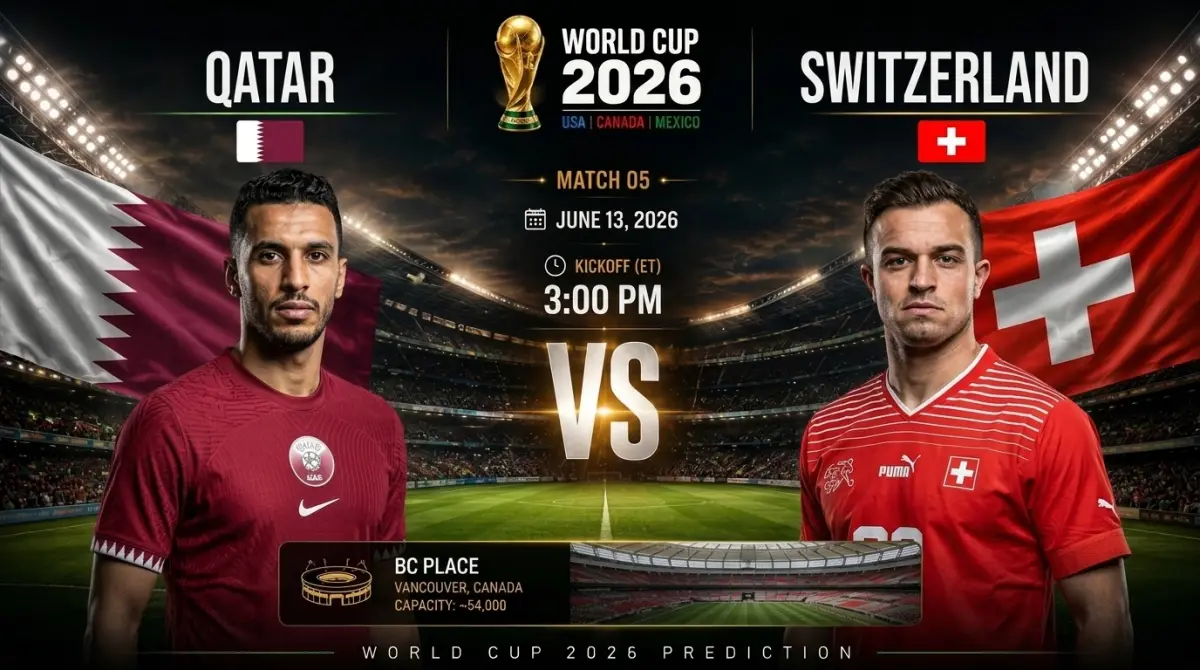


Venue & Atmosphere
The setting at Mercedes-Benz Stadium, Atlanta will influence the emotional tempo of the match, especially in the opening half-hour when nerves are highest.
(World Cup 2026)

Spain
Cape Verde
Expert tactical analysis, recent form comparison, key players, strengths, weaknesses and score prediction for this Group H fixture at Mercedes-Benz Stadium, Atlanta.
Editorial Win Probability
Editorial probability estimate, not betting odds.
Our Spain vs Cape Verde Prediction examines a Group H fixture at Mercedes-Benz Stadium, Atlanta — a match that could set the tone for both teams' World Cup 2026 campaigns. Spain will look to use home-continent familiarity and squad quality, while Cape Verde arrive with a clear game plan built around organisation and selective attacking moments.
Recent-form indicators from the supplied match data, combined with FIFA ranking context and editorial tactical assessment.
| Metric | Spain | Cape Verde |
|---|---|---|
| FIFA Ranking | 2 | 69 |
| Last 5 Record | 2W · 3D · 0L | 3W · 0D · 2L |
| Goals Scored (last 5) | 2.0 per game | 2.2 per game |
| Goals Conceded (last 5) | 0.6 per game | 1.4 per game |
| Clean Sheets (last 5) | 60% | 40% |
| Qualification Record | UEFA qualifiers | CAF qualifiers |
Match results and FIFA rankings from Flashscore (updated June 2026). Not betting data.
Spain open their World Cup 2026 group campaign at Mercedes-Benz Stadium, Atlanta. An early result in Group H matters because the expanded 48-team format still punishes slow starts — three points builds momentum before the remaining group fixtures.
Cape Verde arrive with a defined tactical identity and tournament experience at varying levels. They will view this fixture as a chance to test Spain's composure and establish a platform for qualification from Group H.
This is a classic group-stage dynamic: one side expected to control territory against an opponent prepared to defend in phases and strike in transition. The balance between Spain's possession ambition and Cape Verde's counter-attacking threat should define the match.
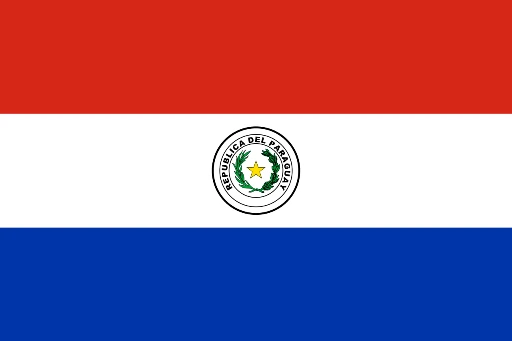
The United States enter this match with one of the clearest pressure profiles of any team in the first round. As co-hosts, the USA are not simply expected to compete; they are expected to control games like this and use home conditions to build early tournament momentum. That changes the tactical psychology of the match. Paraguay can afford to wait, frustrate and attack selected moments. The U.S. must take responsibility with the ball without becoming impatient.
On paper, the strongest part of the American setup is the attacking midfield and wide-forward structure. Christian Pulisic gives the USA a genuine final-third reference point: he can receive wide, drive inside, attack the back post and create separation in one-v-one situations. Folarin Balogun offers a more direct penalty-box profile, while Tim Weah, Gio Reyna and other attacking options give the team different ways to break a compact block depending on game state.
The midfield balance is just as important. Weston McKennie brings vertical running, aerial presence and second-ball aggression, while Tyler Adams, if fit and available, gives the team the defensive coverage needed when the fullbacks advance. Against Paraguay, that rest-defence layer matters because the visitors will not need long possession spells to create danger. One poor turnover in midfield could immediately expose the space behind the U.S. back line.
The biggest American concern is defensive stability. The supplied recent-form data shows 12 goals conceded across five matches, which is too high for a team trying to win a World Cup group. Some of those games were against elite or high-level opposition, but the trend is still relevant: the USA can create chances, but they can also give opponents access to the box when the press is bypassed or when the defensive line is left exposed.
For the USA to win this match cleanly, they need controlled aggression. That means pressing Paraguay's first pass, using width to stretch the block, and avoiding rushed crosses when better cut-back opportunities are available. The hosts should not need to dominate every phase, but they do need to keep the game in Paraguay's half for long enough to force repeated defensive actions. If they do that, their attacking quality should eventually produce enough chances to justify favorite status.
Paraguay are a difficult opponent to price because their best qualities are not always reflected in possession statistics. They are not likely to out-pass the United States at SoFi Stadium, and they may spend long periods without sustained control. That does not mean they are harmless. Paraguay's traditional strength is competitive edge: defensive commitment, physical duels, compact spacing and the ability to make a game uncomfortable for technically superior teams.
The key attacking names are important. Miguel Almirón gives Paraguay pace and direct running from wide or inside-right zones. Julio Enciso provides ball-carrying, shooting threat and the confidence to attack defenders early. Diego Gómez adds midfield running and box-to-box energy, while Gustavo Gómez remains a central defensive reference point because of his leadership, aerial ability and set-piece presence.
Paraguay's most realistic route to a result is not a high-possession game. It is a low-to-medium block that keeps the central lane crowded, then releases runners into the channels when the USA lose the ball. Against an American team that likes to advance fullbacks and commit midfield runners, those transition lanes can appear quickly. Paraguay must be efficient because they may not create many clear chances.
The defensive challenge is surviving U.S. pressure without conceding too many corners, free kicks or second-ball situations. Paraguay can defend their penalty area well, but repeated waves of pressure can eventually break compact teams down. If Paraguay spend too much time pinned near their own box, the match will tilt toward the USA through volume rather than one perfect attacking move.
The best version of Paraguay in this fixture keeps the score level past halftime, slows the tempo, wins fouls, and forces the USA to play through narrow spaces. If that happens, the game becomes psychologically difficult for the hosts. But if the USA score first, Paraguay will have to open up, and that would create the exact spaces American attackers want.
This match has major Group D importance because both teams will see it as a direct path toward knockout-stage qualification. For the USA, winning the opener would put them in control of their own group narrative and reduce the pressure of later fixtures. For Paraguay, taking a draw or stealing a win would immediately change the group calculation and make them a serious candidate to advance.
The expanded World Cup format gives more teams a route into the knockout rounds, but opening results still shape risk tolerance. A U.S. victory would allow the co-hosts to manage the next match with more tactical patience. A Paraguay result would force the USA into a more aggressive mindset later in the group, while giving Paraguay a platform to defend and counter in their remaining matches.
That is why the first goal is especially important. If the USA score first, Paraguay will have to leave their compact structure more often, and the match could open up. If Paraguay score first or reach the hour mark level, the pressure inside SoFi Stadium could become a tactical factor of its own.
Editorial assessment across seven key match factors.
| Factor | Spain | Cape Verde | Edge |
|---|---|---|---|
| World Cup experience | Co-host with recent knockout-stage World Cup experience and heavy home expectations | CONMEBOL-tested opponent with a physical, tournament-style profile | Spain |
| Squad depth | More attacking depth through Pulisic, Balogun, McKennie, Reyna and wide options | Less overall depth, but a strong competitive core led by Almirón, Enciso and Gómez | Spain |
| Attacking threat | Wide overloads, high pressing, direct runs behind and set-piece volume | Counters through Almirón and Enciso, plus set-piece threat from Gustavo Gómez | Spain |
| Defensive stability | Higher defensive ceiling, but recent concession numbers are a concern | Naturally compact and physical, especially when defending a low or mid block | Even |
| Midfield control | Better technical midfield profile and more capacity to control tempo at home | Hard-working midfield, but likely to defend more than dominate possession | Spain |
| Set pieces | Useful delivery and runners attacking the second phase | Strong aerial targets and defensive set-piece discipline | Even |
| Pressure factor | Home pressure at SoFi Stadium could increase if the match stays level | Less pressure and more comfort playing a disruptive underdog role | Cape Verde |
Spain will look to dominate the ball and stretch Cape Verde horizontally. Cape Verde are likely to concede territory willingly, focusing on a compact defensive shape between the lines.
Spain may press selectively in the opening phases to force early errors. Cape Verde will more often drop into a mid-block, triggering coordinated presses only when build-up becomes predictable.
The central battle lies here. Cape Verde's best route to goal is quick vertical play through runners exploiting space in behind. Spain must balance attacking width with rest-defense discipline.
Spain's wide combinations should test Cape Verde's defensive spacing. The visitors will aim to double up on the flanks and force play into central congestion.
Both teams carry set-piece relevance. Spain's delivery quality could test zonal marking, while Cape Verde's physical presence on defensive set pieces adds an underappreciated threat.
Spain arrive unbeaten across their last five internationals (2W, 3D), including wins over Serbia and Georgia plus draws with Iraq and Egypt. They have been productive in attack (2.0 goals per game) and solid defensively, with 3 clean sheets in that span.
Cape Verde are 3W, 0D, 2L over their last five internationals, including wins over Bermuda, Serbia and Finland plus losses to Chile and Egypt. They have been productive in attack (2.2 goals per game) and vulnerable at the back, with 2 clean sheets in that span.
Spain's primary creative outlet will be central to breaking down a compact Cape Verde block. Movement between the lines and link-up in the final third should define their best chances.
The player who sets Spain's defensive rest balance will be critical in preventing Cape Verde counter-attacks through central channels after turnover.
Cape Verde's most dangerous outlet in transition will be the key counter-attacking weapon if Spain overcommit in possession.
Organisation at the back and command of the penalty area will shape how aggressively Cape Verde can play from a low block throughout the match.
Spain's advantages in this fixture are structural: deeper squad quality, greater tournament experience and the ability to control phases of the match through possession and territorial pressure.
In wide areas, Spain should generate enough service to test a compact Cape Verde block. Set-piece quality adds secondary routes to goal if central corridors become congested.
Cape Verde's best path to a positive result runs through disciplined defensive organisation and selective verticality. If Spain overcommit in attack, the visitors have the pace to exploit space in behind.
As underdogs, Cape Verde carry less external pressure than the favourite. That freedom can translate into sharper decision-making in the first half, particularly if Spain force the issue too early.
The setting at Mercedes-Benz Stadium, Atlanta will influence the emotional tempo of the match, especially in the opening half-hour when nerves are highest.
The USA have home expectations; Paraguay have CONMEBOL toughness. The winner of the emotional battle may be the team that controls tempo after the first major chance or setback.
If Spain overcommit, Cape Verde's pace on the break becomes the equalizer. One well-timed counter could shift the entire tactical dynamic.
The first goal changes everything. USA scoring first would force Paraguay out; Paraguay scoring first would turn the match into a patience test for the co-hosts.
4-3-3 / 4-2-3-1
Spain are expected to line up with a single pivot screening the back line, two advanced midfielders supporting the striker, and fullbacks providing width.
4-2-3-1 / compact 4-4-2
Cape Verde will likely defend in a compact low block, with two disciplined pivots shielding the back four and quick transitions into the final third.
USA win
Confidence: Medium
This Spain vs Cape Verde Prediction reflects editorial analysis of squad quality, recent form from Flashscore and the tactical matchup in Group H. World Cup openers often produce cautious scorelines — our call stays within a measured confidence band.
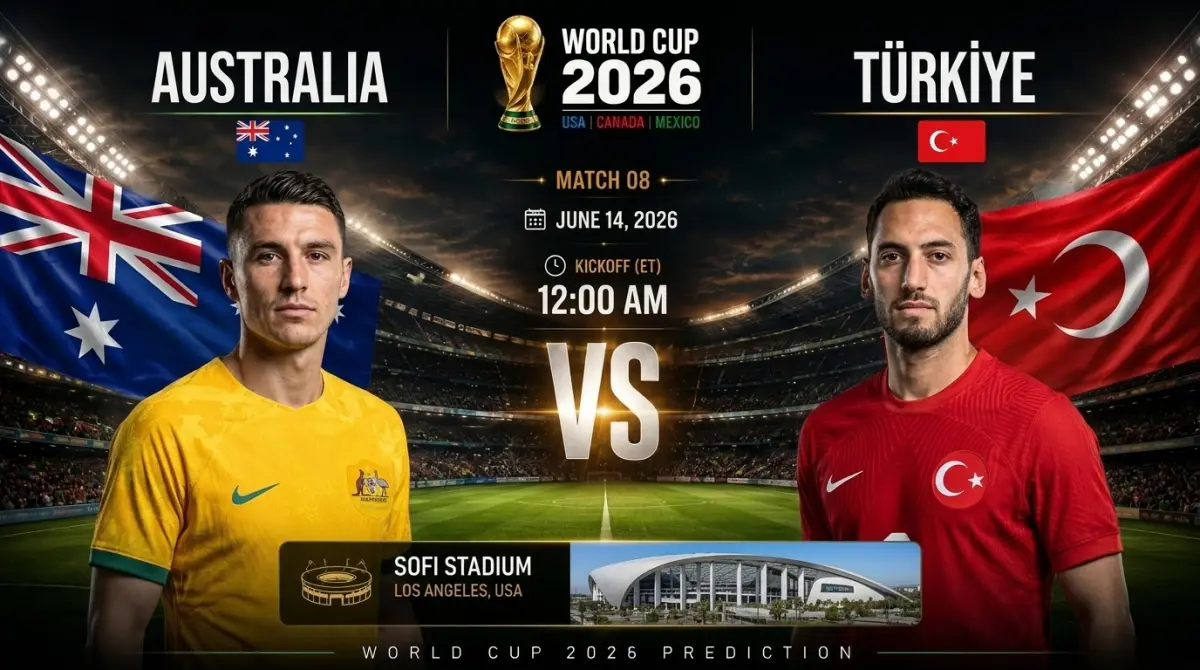
The United States are the favorites to beat Paraguay. The USA have home advantage at SoFi Stadium, a stronger attacking squad and a higher ranking profile. Paraguay are dangerous enough to make the match competitive, but the overall prediction leans toward a U.S. win.
Our predicted score is USA 2-1 Paraguay. A narrower 1-0 win for the United States is also realistic if Paraguay defend deep and limit open-play chances. A 1-1 draw remains possible if the USA struggle to convert pressure into clear chances.
USA vs Paraguay is scheduled for SoFi Stadium in Inglewood, California. The venue gives the United States a clear home-atmosphere advantage, but it also increases pressure because the hosts will be expected to start their World Cup campaign strongly.
Paraguay can cause an upset if they keep the match low scoring, defend compactly and exploit transition chances through Miguel Almirón and Julio Enciso. Their best route is to frustrate the USA for long stretches and turn the game into a physical, stop-start contest.
For the USA, Christian Pulisic, Folarin Balogun and Weston McKennie are the key players because they influence chance creation, penalty-box movement and midfield pressure. For Paraguay, Miguel Almirón, Julio Enciso and Gustavo Gómez are central to the counter-attacking and defensive game plan.
It could produce goals because both teams have attacking threats, but the most likely pattern is controlled rather than open. Paraguay are expected to defend compactly, while the USA will try to create pressure through possession and wide combinations. A 2-1 or 1-0 USA win is more realistic than a wide-open shootout.